Insights from the Field
These are field notes from more than 25 years of running high-stakes projects and building the teams behind them. Every post starts with a real problem from a real job: scope that drifted, a vendor lock that held, a handoff that broke, or a schedule that stayed honest. Use them the way I wrote them, as working tools you can bring to your next project meeting.
Looking for a term? See our construction glossary for plain-English definitions built for project owners.

When the owner doesn’t carry in-house crews, the responsibility for directing the work in the field lands on the vendor project manager. That person has more direct control over executing the deliverable than anyone on the owner’s side. Get that alignment wrong and the owner’s project manager spends the job…

When a contractor’s field crew arrives on site without a clear briefing on what they’re doing, the project absorbs every minute they spend figuring it out, and the cost goes beyond lost hours. The fix is a short briefing before anyone touches the work, covering scope, sequence, site constraints, who…
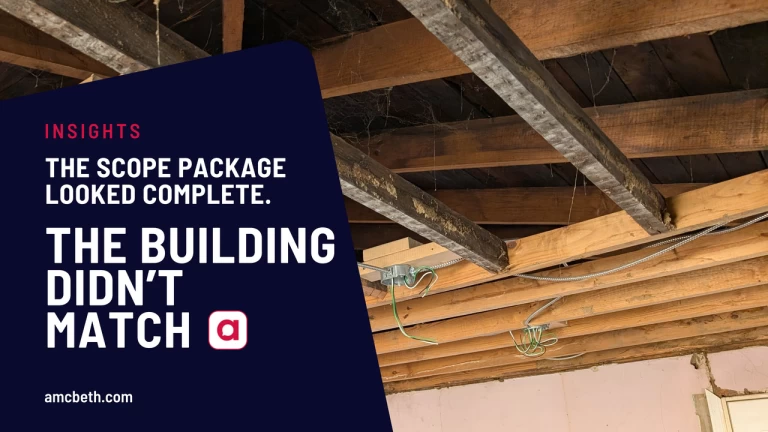
The Scope Package Looked Complete. The Building Didn’t Match. Scope documents can look complete on paper and still not reflect what’s actually in the building, especially in buildings that have been modified over the years. Verifying the scope of work against the drawings doesn’t take special software. A ladder, a…
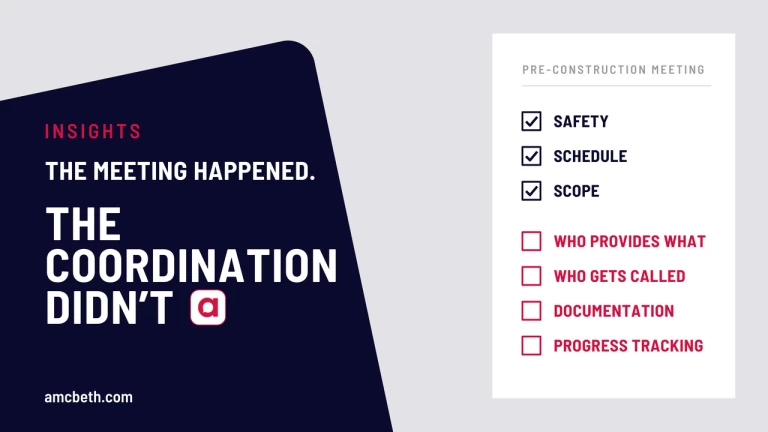
A pre-construction meeting agenda can cover safety, schedule, scope, and still leave the project exposed. The gaps that tend to create mid-project problems aren’t in the topics that were discussed. They’re in the coordination that wasn’t locked down — who is providing what, who gets called when something comes up,…
Schedule slippage warning signs don’t wait for a deadline to break. The mechanism is float — the buffer built into a schedule to absorb small variances. When float gets consumed task by task without anyone connecting the pattern, it’s gone before the milestone shows a problem. By the time the…
Projects don’t usually fall behind all at once. The slide often starts during planning, when the work is outlined but the order it needs to move in isn’t clear. Most project managers have a list. Not enough have a sequence. When something that should have happened first gets delayed, the…
Most design reviews confirm a system will work. Almost none include a design review maintainability check — and that gap is expensive. When a maintainability problem is caught during design, it costs a drawing change. Caught during operations, the same problem costs 150 times more and compounds across every maintenance…
One-on-one meetings are simultaneously the most important and overlooked aspects of team management. Rarely are they used as intended. When done, they are short, problem-centric, and generally very ineffective. And it’s sad because when handled correctly, one-on-one meetings are the most powerful tool in any manager’s arsenal. They unite, encourage,…
Becoming a manager for the first time in your life is a really big deal. You have to detach yourself from the value of your individual performance and tune into something bigger. Your value system, the way you navigate challenges, and how you do your job all have to adjust.…
